Men's wheelchair adaptive summer trousers
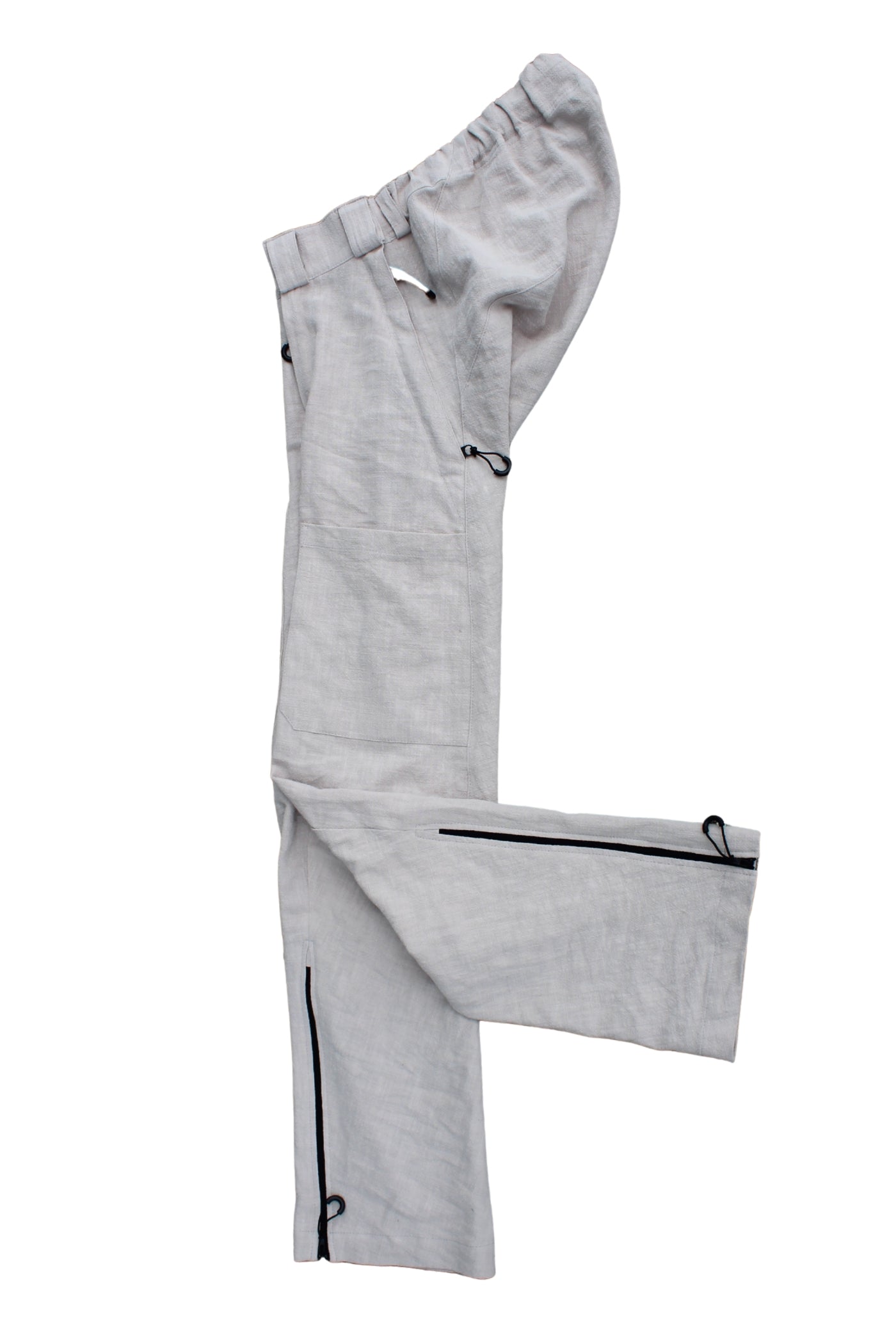
Side view of Vilber's adaptive trousers laid flat, showing the balanced side line and  zip at the inner leg.
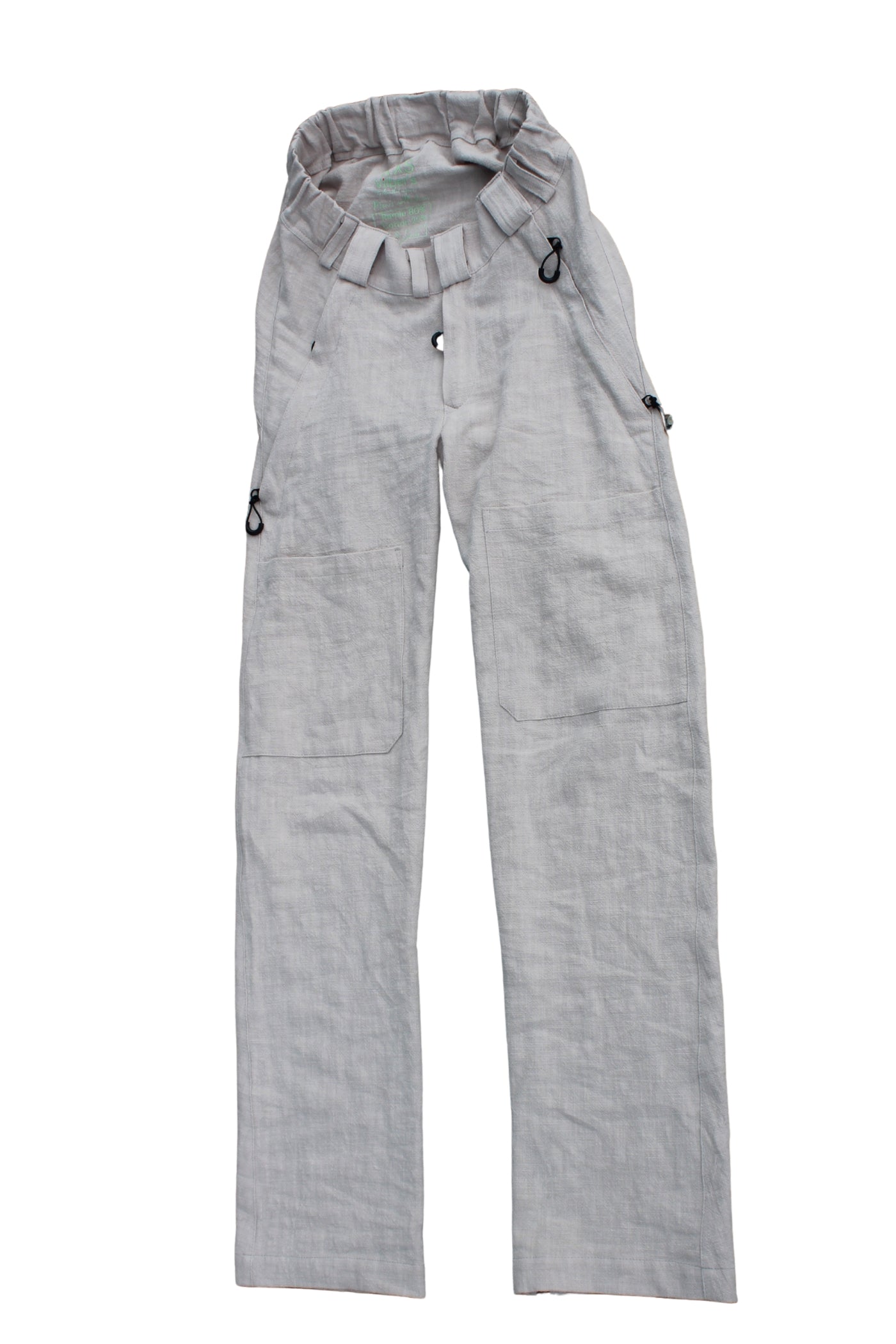
Vilber's men's summer trousers in beige ramie fabric, laid flat showing elasticated waistband and front opening.
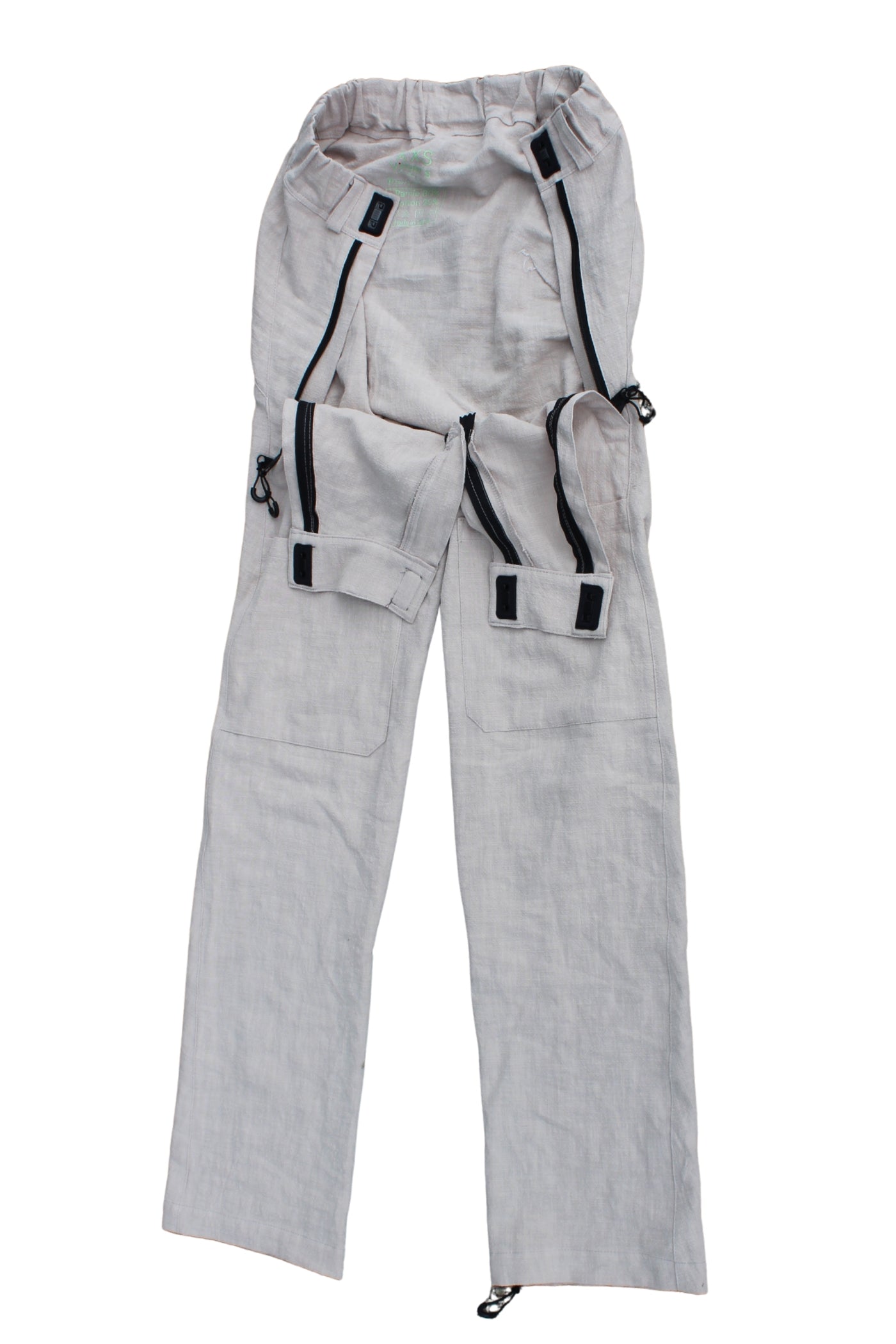
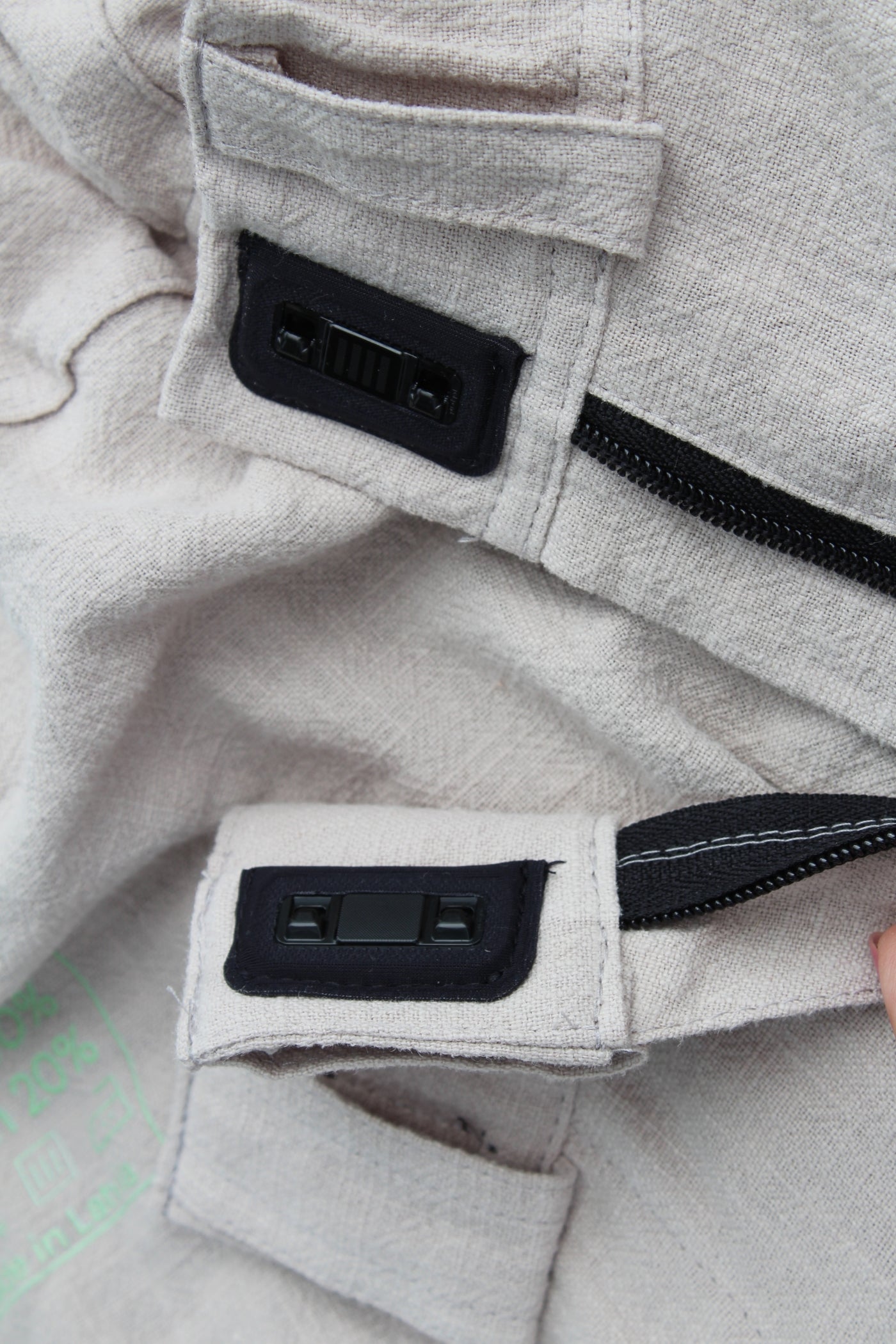
Close view of Vilber's adaptive trousers showing the hidden front access panel with magnetic hook-and-hook closure and zip, disguised as a pocket.
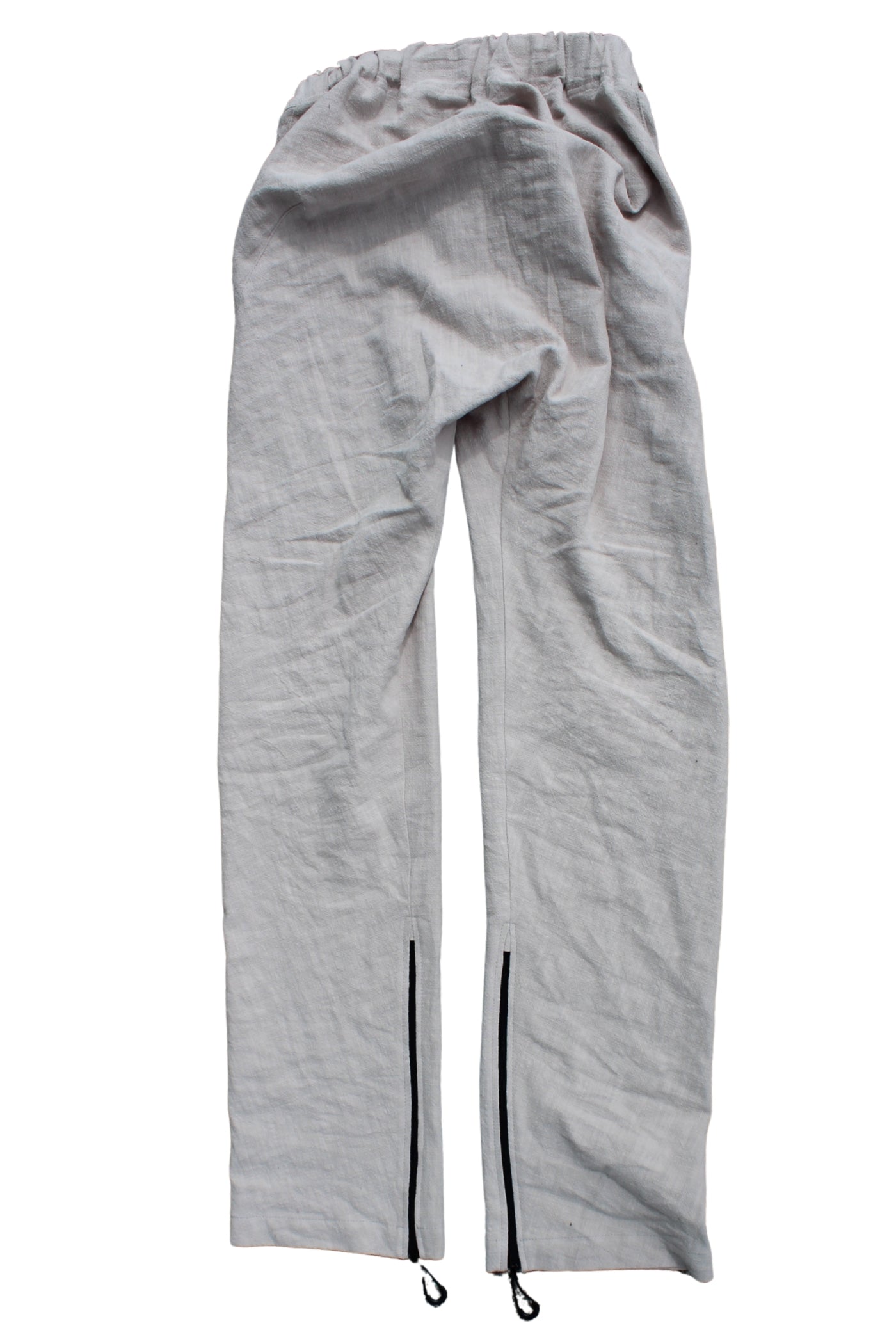
Back view of Vilber's adaptive summer trousers laid flat, showing the single-piece back panel with no centre seam.
Close-up of the magnetic hook-and-hook closure on Vilber's adaptive trousers, showing how the front access panel aligns and locks into place.
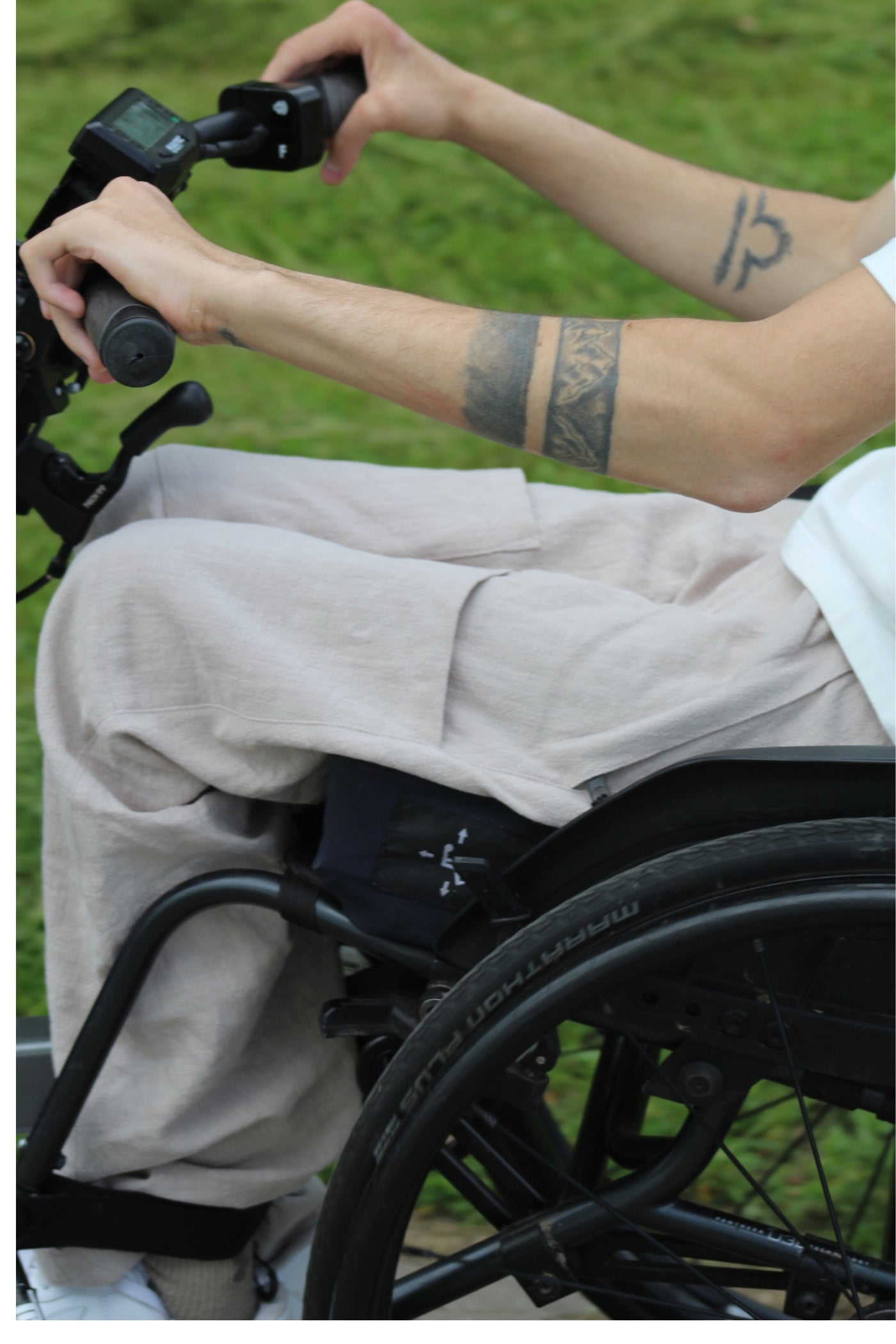
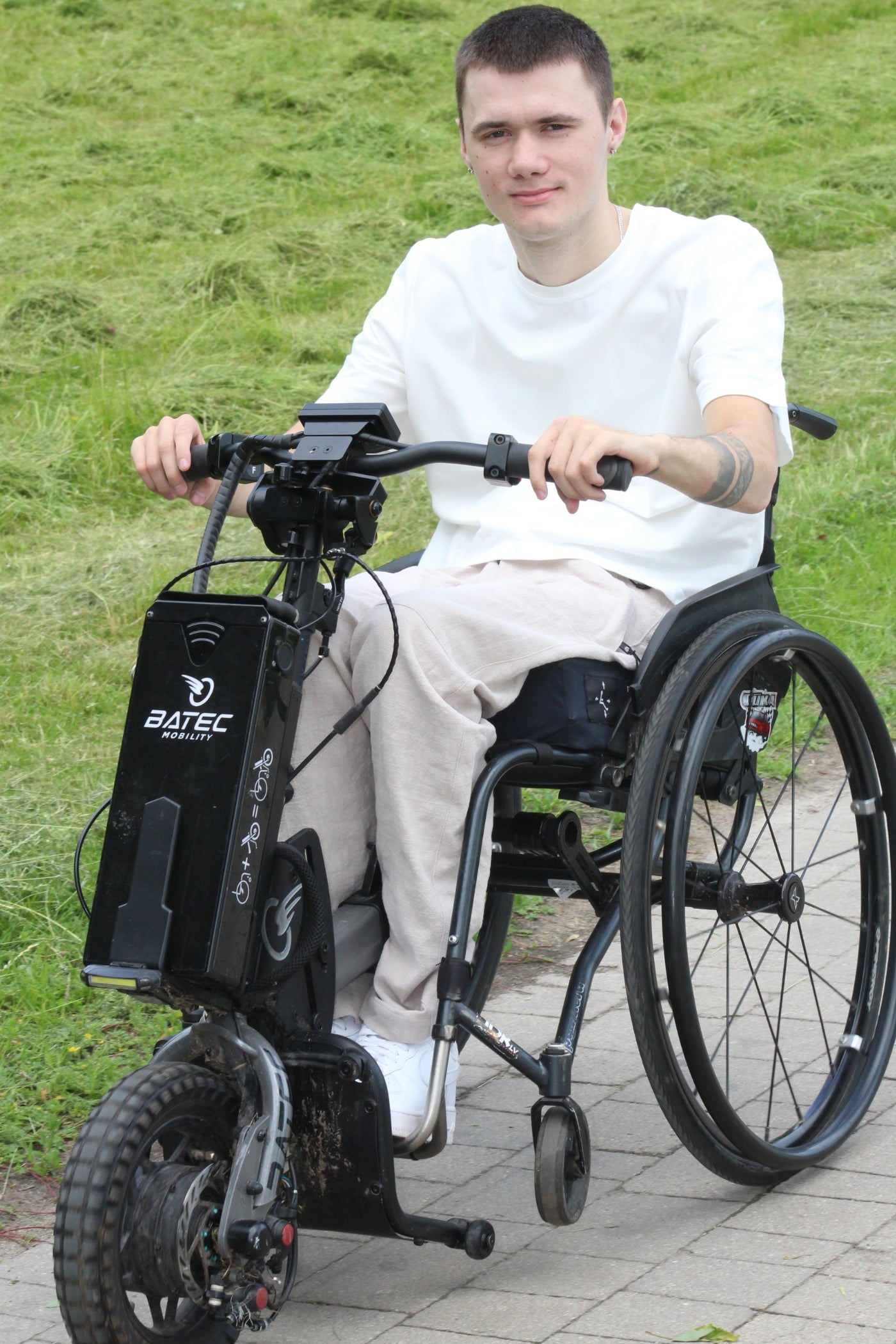
Close-up of a wheelchair user's hands on a Batec power add-on handlebar, with Vilber's beige summer trousers visible across the lap.
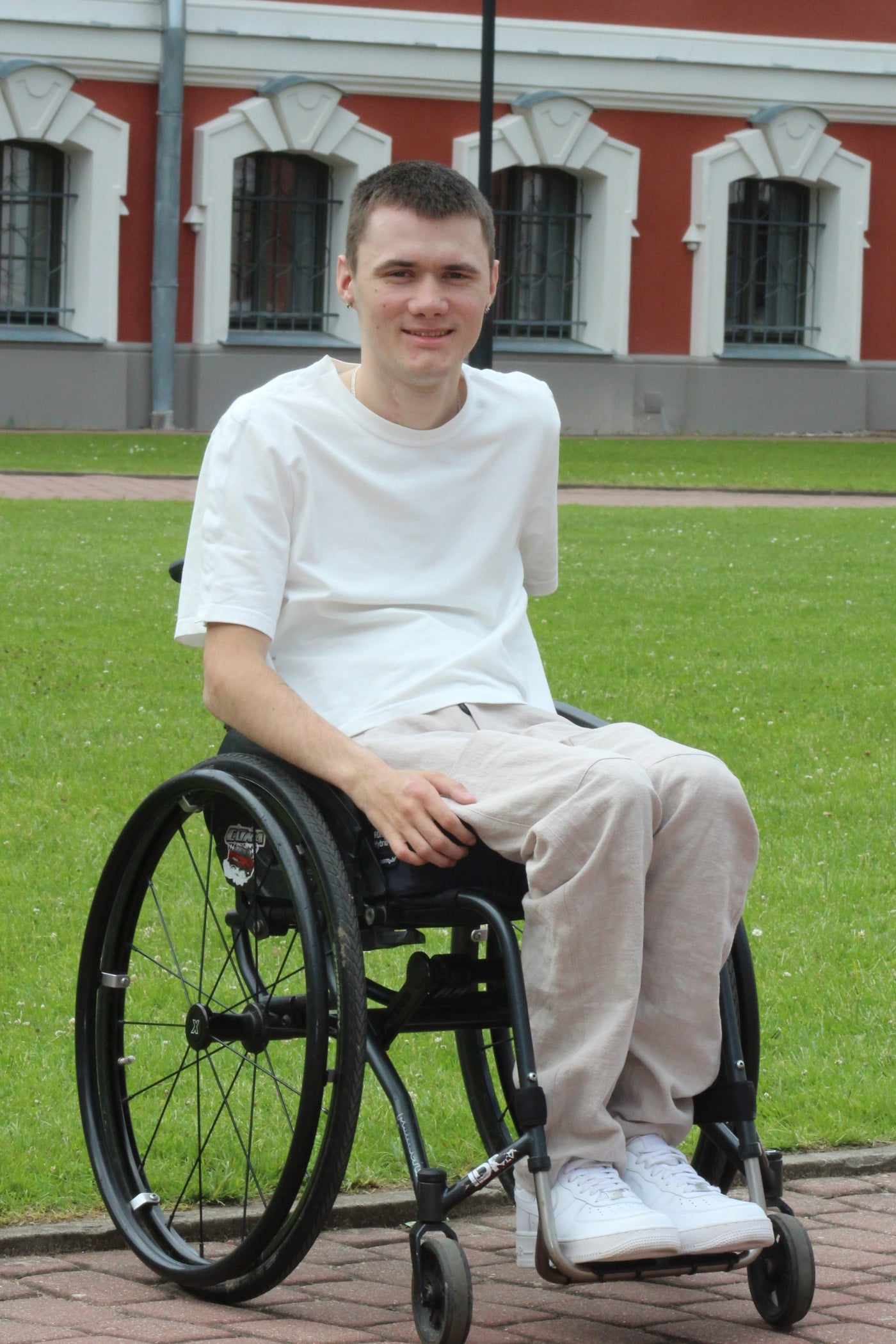
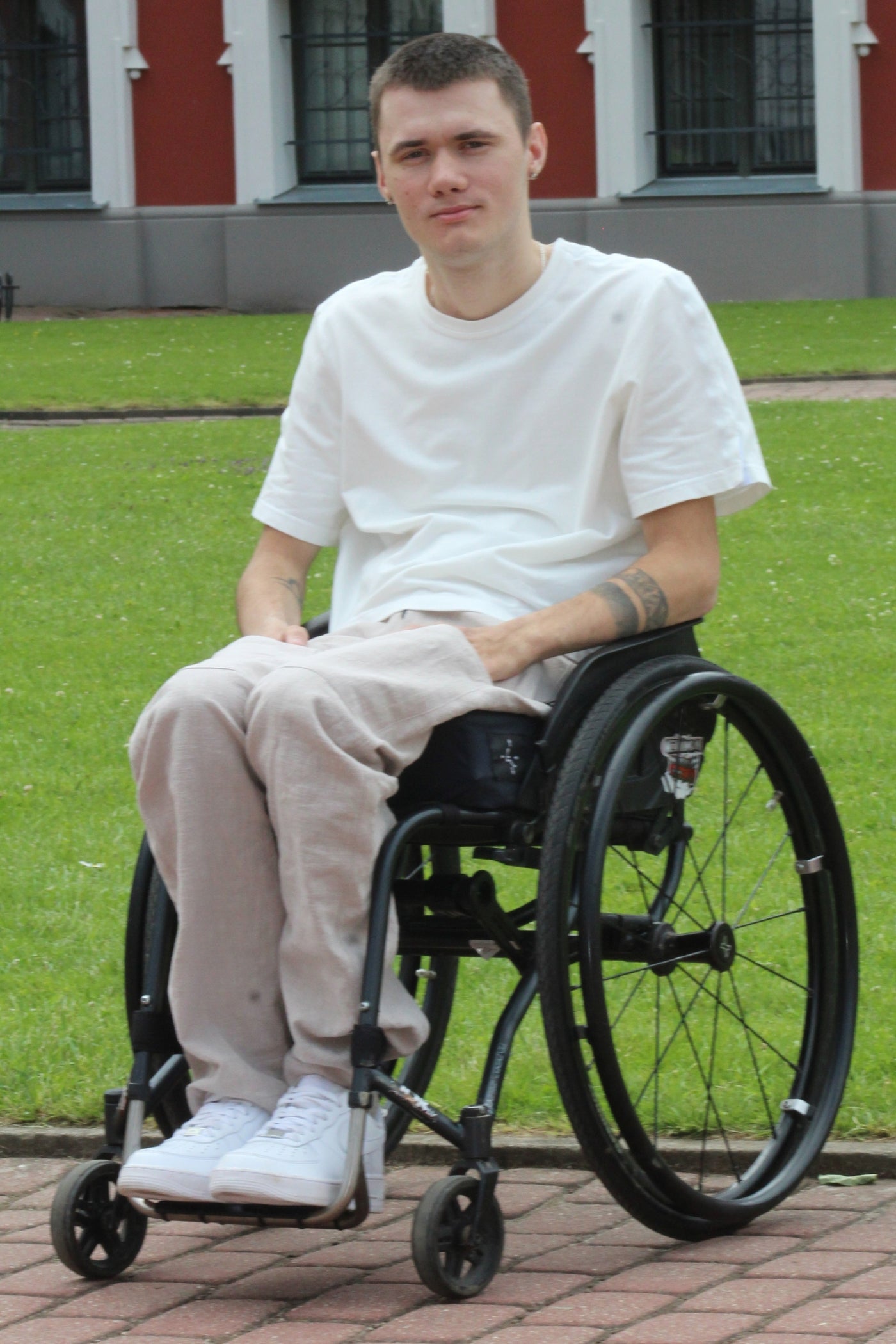
Young man sitting in a manual wheelchair outdoors, wearing Vilber's beige ramie summer trousers and a white t-shirt.
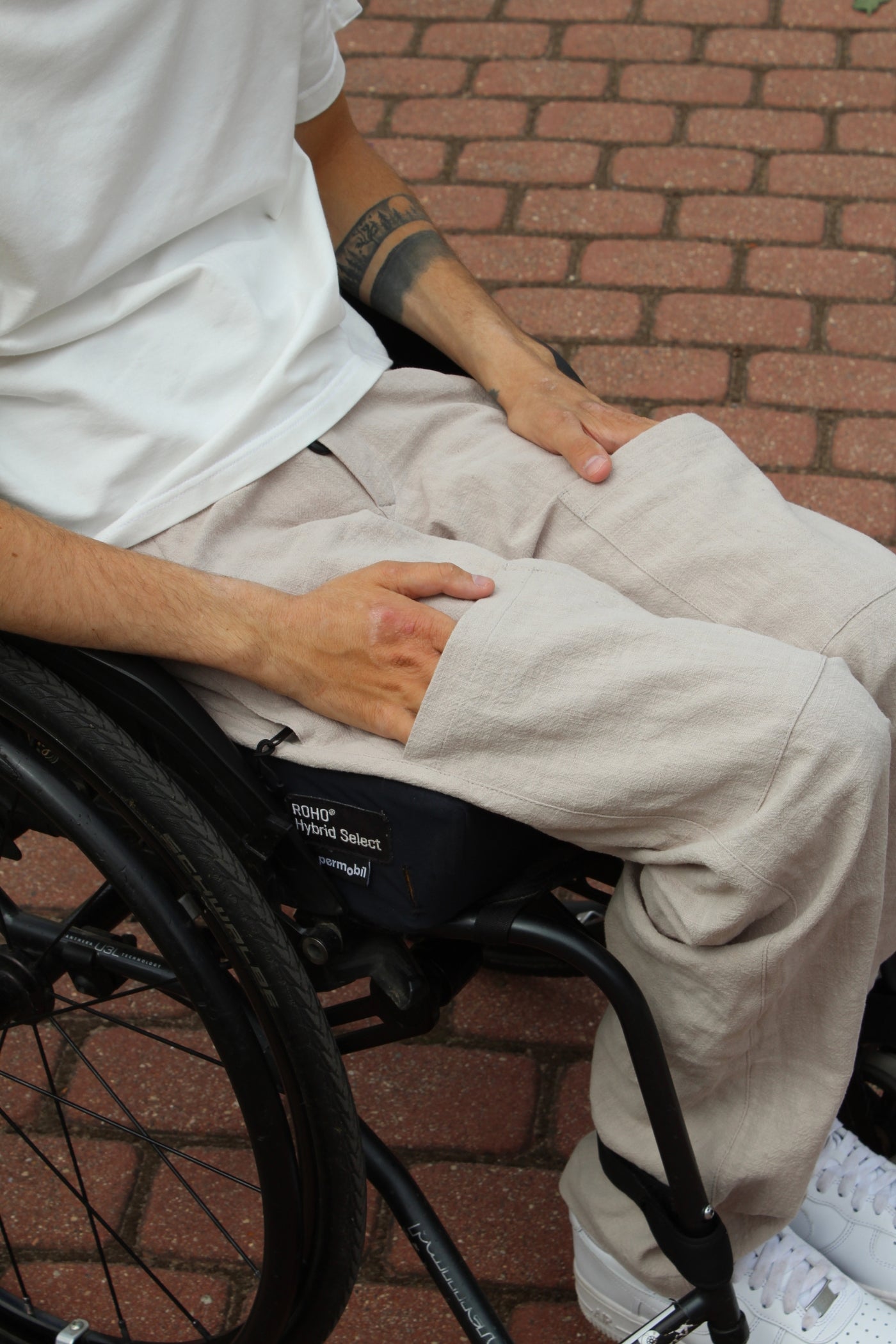
Close front view of a wheelchair user wearing Vilber's beige ramie summer trousers, showing the relaxed seated fit through the legs.

Vilber's

Men's wheelchair adaptive summer trousers

Sale price€102,00
Color:Beige
Size:XXS
In stock
Quantity:
Pickup available at Workshop Usually ready in 24 hours

Men's wheelchair adaptive summer trousers

Beige / XXS

Workshop

Pickup available, usually ready in 24 hours

Gaujas iela 18
Vangaži 2136
Latvia

23553444

Sizing

Adaptive clothing sizing guide

Finding the perfect fit for your adaptive clothing should be effortless. At Vilbers.com, we understand the unique needs of our customers, especially those seeking comfortable and functional wheelchair adaptive trousers and other adaptive clothing. This guide will help you confidently select the right size, whether you're a paraplegic or quadriplegic individual, or simply looking for inclusive fashion.


How to choose your pants by body measurements

We've designed our sizing charts around body measurements to ensure the best possible fit for our adaptive trousers. To find your ideal size, you'll need to measure your:

  1. Waist: Measure around your natural waistline, typically the narrowest part of your torso.
  2. Hips: Measure around the fullest part of your hips, keeping the measuring tape parallel to the floor.
  3. Thighs: Measure around the fullest part of one thigh.

Important note on waist adjustment: Our adaptive trousers feature an adjustable waist. This means that if the size fits your hips and thighs comfortably, the waist measurement can fluctuate by approximately 20% and still provide a great fit.


Measuring from a seated or lying position

We know that standing to take measurements isn't always possible. You can comfortably and accurately measure yourself while lying down or sitting in your wheelchair. Just follow these simple steps:

  • For Waist: If you're seated, lean slightly to the side to expose your natural waistline. If lying down, simply locate your natural waist. Measure around this area.
  • For Hips: While seated or lying down, ensure the tape measure goes around the fullest part of your hips and bottom. Try to keep the tape measure as level as possible.
  • For Thighs: While seated or lying down, measure around the fullest part of one thigh. Make sure the leg is relaxed.

Don't have a measuring tape? No problem!

You can still accurately measure yourself using a simple household item:

  1. Grab a ribbon, rope, or even a piece of string.
  2. Wrap it comfortably around the area you need to measure (waist, hips, or thigh) while seated or lying down.
  3. Mark the point where the ribbon overlaps.
  4. Lay the ribbon flat and measure its length with a standard ruler.

Measure your favorite garment for a perfect match

For an even more precise fit, you can compare the measurements of your favorite well-fitting pants or shirt to the measurements of our garments. We provide detailed garment measurements for all our items. Simply:

  1. Lay your favorite item flat on a bed or flat surface.
  2. Measure the relevant dimensions (e.g., inseam, waist width, hip width for pants; chest width, sleeve length for shirts).
  3. Compare these measurements to the "Garment Measurements" provided on our product pages.


Sizing

Adaptive clothing sizing guide

Finding the perfect fit for your adaptive clothing should be effortless. At Vilbers.com, we understand the unique needs of our customers, especially those seeking comfortable and functional wheelchair adaptive trousers and other adaptive clothing. This guide will help you confidently select the right size, whether you're a paraplegic or quadriplegic individual, or simply looking for inclusive fashion.


How to choose your pants by body measurements

We've designed our sizing charts around body measurements to ensure the best possible fit for our adaptive trousers. To find your ideal size, you'll need to measure your:

  1. Waist: Measure around your natural waistline, typically the narrowest part of your torso.
  2. Hips: Measure around the fullest part of your hips, keeping the measuring tape parallel to the floor.
  3. Thighs: Measure around the fullest part of one thigh.

Important note on waist adjustment: Our adaptive trousers feature an adjustable waist. This means that if the size fits your hips and thighs comfortably, the waist measurement can fluctuate by approximately 20% and still provide a great fit.


Measuring from a seated or lying position

We know that standing to take measurements isn't always possible. You can comfortably and accurately measure yourself while lying down or sitting in your wheelchair. Just follow these simple steps:

  • For Waist: If you're seated, lean slightly to the side to expose your natural waistline. If lying down, simply locate your natural waist. Measure around this area.
  • For Hips: While seated or lying down, ensure the tape measure goes around the fullest part of your hips and bottom. Try to keep the tape measure as level as possible.
  • For Thighs: While seated or lying down, measure around the fullest part of one thigh. Make sure the leg is relaxed.

Don't have a measuring tape? No problem!

You can still accurately measure yourself using a simple household item:

  1. Grab a ribbon, rope, or even a piece of string.
  2. Wrap it comfortably around the area you need to measure (waist, hips, or thigh) while seated or lying down.
  3. Mark the point where the ribbon overlaps.
  4. Lay the ribbon flat and measure its length with a standard ruler.

Measure your favorite garment for a perfect match

For an even more precise fit, you can compare the measurements of your favorite well-fitting pants or shirt to the measurements of our garments. We provide detailed garment measurements for all our items. Simply:

  1. Lay your favorite item flat on a bed or flat surface.
  2. Measure the relevant dimensions (e.g., inseam, waist width, hip width for pants; chest width, sleeve length for shirts).
  3. Compare these measurements to the "Garment Measurements" provided on our product pages.


Most trousers, even ones labelled "adaptive," are built for a standing body and then adjusted. The usual fix is raising the back waistband, but that doesn't actually solve the problem. Standard trousers have a centre back seam that runs between the seat. In a seated position, that seam presses directly into the body and pulls the fabric down, no matter how high the waistband sits.

Vilber's trousers remove that seam entirely. The back is cut from a single piece of fabric, shaped from the start for the seated position, so it wraps around the seat and lower back instead of fighting against it. The waistband itself is formed by folding over the top edge of that same back panel and threading elastic through the channel this creates, with the fold stitched twice over so it holds up to repeated wear without coming apart.

Access is built into the front, where your hands already are, and disguised as something else entirely. What looks like a regular pocket is actually a drop-down panel with a two-way zip. Open it, and you have direct, private access for catheterisation, or a clean way to route a catheter tube through what still reads as a pocket from the outside. No one needs to know it's there. You do, and that's what matters.

The panel closes with a hook-and-hook system guided by magnets, so the two sides find each other and lock into place without fumbling for alignment, and slides open sideways when you need it.

This cut also gives more room through the calves and a side line that stays balanced and doesn't twist as you move.

From a distance, or up close, these are just trousers. That's the point.

The fabric: 80% ramie, 20% cotton. No elastane in the fabric itself.

That's a deliberate choice. Elastane is usually added to compensate for a pattern that doesn't quite fit, it lets a poorly drafted garment stretch into place instead of being cut correctly in the first place. It's also the first fibre to break down, which is why stretch trousers lose their shape long before the fabric itself wears out.

Because we've put the work into getting the pattern right, we don't need it. Ramie is a natural plant fibre related to nettle, with a feel similar to linen but stronger, more breathable, and naturally resistant to bacteria and odour. It actively pulls moisture away from the skin and helps regulate temperature, making it a noticeably better match for summer wear than cotton or linen alone. Without elastane, the fabric also offers more resistance when someone is helping you transfer, giving a hand or a sling something stable to hold rather than fabric that just stretches away. And without synthetic fibre to break down, these trousers are built to outlast a typical pair by a wide margin.

Details: Single-piece back panel with no centre seam, double-stitched fold-over waistband with elastic, balanced side line, no-twist fit through the calves. Front-disguised drop-down access panel with magnetic hook-and-hook closure. Two-way zips at the inner leg for catheter or limited-mobility access. Wider cut at the knee. Two thigh pockets.

Available in light beige and black. Shade of the light colour may vary slightly between fabric batches. Model wears size XXS.


Why this construction matters:

Most "wheelchair-adapted" trousers simply add extra fabric to the back waistband. The centre back seam stays. The problem stays.

Vilber's removes the seam entirely. Combined with a pattern drafted specifically for the seated position, the trousers hold their shape throughout the day, without pulling, without shifting, and without exposing your back during transfers.

Moving access to the front, instead of the side seams, means you manage it in front of you, with both hands, without twisting or reaching behind yourself. And disguising it as a pocket means the trousers don't announce anything. You decide who knows what they actually do.

Care:

Machine washable at 40°C or below. The trousers contain magnets in the front closure, so washing above this temperature is not recommended. Ramie softens over time and improves with washing, no special treatment required.

Excellent seamstress work and very sturdy fastening. I totally recommend this shop!

Anna Karin U.

Got questions?

Ask all your questions via this contact form and we'll respond ASAP. Please, paste the link of the product for faster communication. We are here for you!